
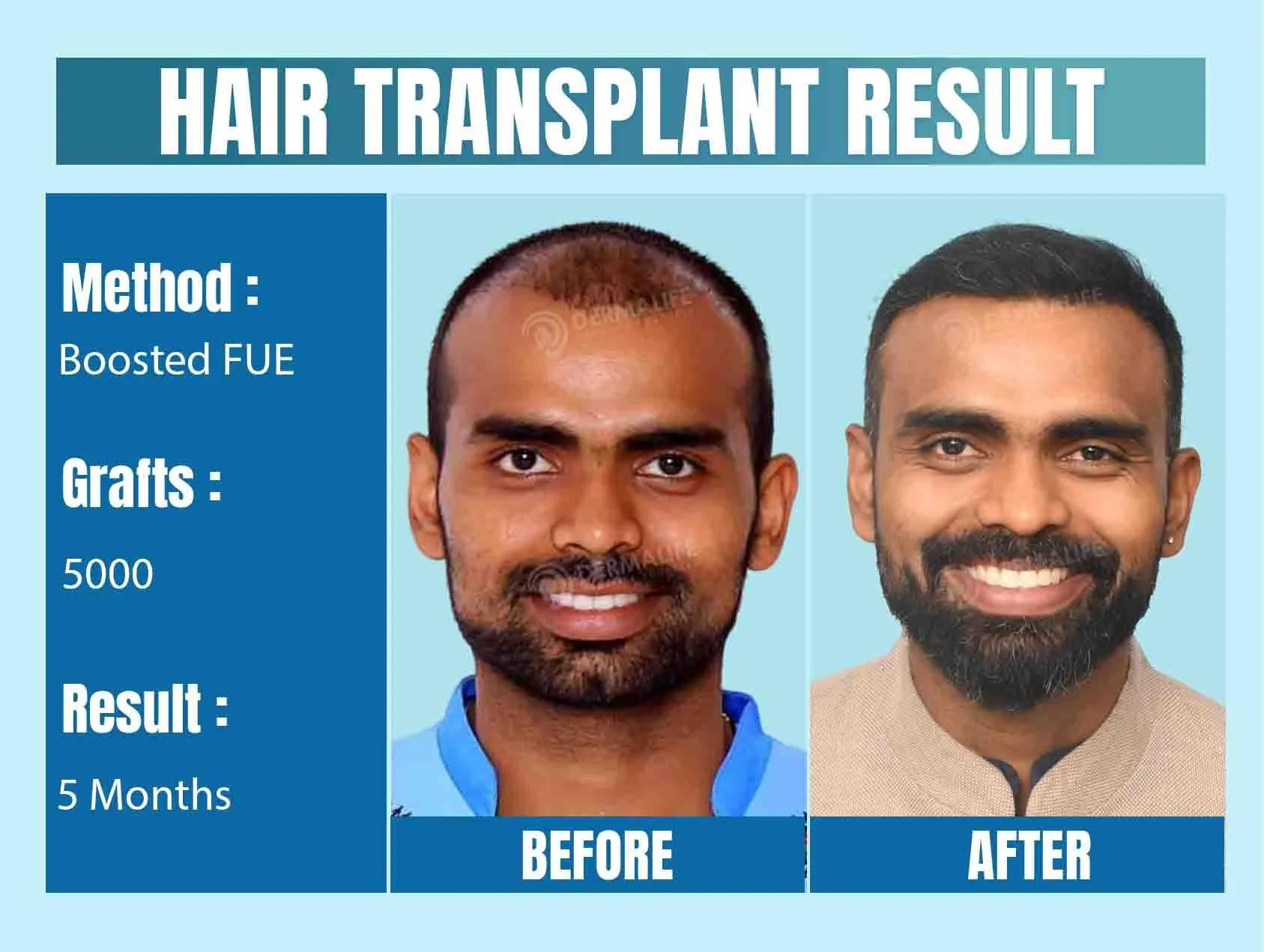
One of the most important concerns for anyone considering hair restoration is how many transplanted hair grafts will successfully grow. Patients often ask about the graft survival rate in a hair transplant because they want to understand whether the transplanted follicles will produce permanent hair growth.
Graft survival is an important factor in determining the outcome of a hair transplant. However, it is not determined by a single factor or a guaranteed percentage. The result depends on surgical technique, graft handling, donor hair quality, recipient scalp condition, the surgeon’s experience, and individual healing.
Understanding how graft survival works can help patients make informed decisions before undergoing hair transplant surgery.
What Is Graft Survival Rate in a Hair Transplant?
A graft is a naturally occurring follicular unit containing one or more hair follicles. During a hair transplant, these grafts are extracted from the donor area, usually at the back and sides of the scalp, and implanted into areas affected by hair loss.
The graft survival rate refers to the proportion of transplanted follicular units that remain viable and subsequently produce hair growth.
For example, if 2,000 grafts are transplanted, the number that eventually produces visible hair may differ depending on surgical and biological factors.
It is important to understand that graft survival and the number of visible hairs are not the same. A graft containing multiple hair follicles may produce more than one hair strand.
What Is a Good Graft Survival Rate?
Patients may come across clinics advertising graft survival rates of 95%, 98%, or even higher. However, such figures should be interpreted carefully.
There is no single survival percentage that can be guaranteed for every patient. Outcomes vary according to surgical protocols, graft characteristics, patient health, and how survival is measured.
A clinic quoting a specific percentage should be able to explain how it was calculated, whether it is based on documented clinical follow-up, and whether the figure represents graft survival or visible hair growth.
Rather than focusing only on a promised percentage, patients should evaluate the surgeon’s technique, graft handling practices, clinical experience, and documented long-term results.
1. Graft Handling During Surgery
One of the important factors influencing graft viability is how follicular units are handled after extraction.
Once removed from the scalp, grafts are outside their natural environment. Excessive manipulation, dehydration, and inappropriate storage conditions can potentially affect their viability.
A well-organised surgical process aims to:
-
Minimise unnecessary handling of grafts
-
Maintain appropriate storage conditions
-
Avoid prolonged exposure outside suitable preservation conditions
-
Coordinate extraction and implantation efficiently
-
Reduce avoidable trauma during handling
These measures help support graft preservation during the procedure.
2. Extraction Technique and Surgical Skill
The extraction process requires precision because follicular units can be damaged during removal.
The surgeon must select appropriate instruments and extraction techniques according to the patient’s hair characteristics, scalp condition, and follicular unit distribution.
Excessive force or inappropriate punch selection may damage follicular units. Similarly, poor extraction planning can affect the appearance and density of the donor area.
This is why the surgeon’s technical experience and understanding of follicular anatomy are important considerations when choosing a hair transplant clinic.
3. Graft Placement and Implantation
After extraction, grafts are implanted into the recipient area.
The surgeon must consider the angle, direction, depth, and distribution of each graft. Improper placement may affect the natural appearance of the result and can potentially compromise graft viability.
The frontal hairline generally requires careful placement of single-hair grafts, while other areas may require a different distribution depending on the patient’s existing hair and desired coverage.
Appropriate spacing and recipient-site planning are also important to avoid unnecessary trauma to the scalp.
4. Recipient Scalp Condition
The condition of the recipient area can influence the outcome of hair transplantation.
Factors such as scalp health, existing scarring, previous surgical procedures, and blood supply may affect treatment planning.
Patients with a history of unsuccessful hair transplantation or significant scalp scarring may require a more detailed assessment before undergoing another procedure.
The surgeon should evaluate whether the recipient area is suitable for transplantation and explain any limitations.
5. Patient Health and Healing
Individual biological factors also influence the hair transplant recovery process.
General health, smoking, certain medical conditions, scalp inflammation, and adherence to post-operative instructions may affect healing.
Patients should inform their doctor about their medical history, current medications, allergies, and any existing scalp conditions before surgery.
Following post-operative instructions is important for reducing avoidable complications during recovery.
6. Does Graft Survival Mean Immediate Hair Growth?
No. Hair transplantation involves a gradual growth process.
Many patients experience temporary shedding of the transplanted hair shafts during the initial weeks after surgery. This is commonly known as shock shedding and does not necessarily mean that the follicular units have been lost.
New hair growth generally begins over the following months, with visible improvement developing gradually. Many patients assess their results around 9 to 12 months, although some individuals may continue to see changes beyond this period.
Patients should understand that the growth timeline varies and that early shedding is not, by itself, evidence of graft failure.
7. Can a Higher Graft Count Improve the Result?
Not necessarily. Transplanting more grafts does not automatically produce better density or a more natural appearance.
The surgeon must consider donor area capacity, recipient scalp condition, existing hair, and the distribution required across the affected areas.
Excessive extraction can damage the donor area, while placing too many grafts in a limited recipient region may create unnecessary surgical challenges.
A carefully planned procedure aims to use the available donor hair efficiently rather than simply maximising the graft count.
8. How Does Boosted FUE Approach Graft Handling?
Dermalife Skin & Hair Clinic in South Delhi offers its specialised Boosted FUE approach under the guidance of Dr. Gaurav Garg.
According to the clinic, this approach uses specialised FUE extraction instruments, jeweller’s forceps, and a technique described as the “No Root Touch Method”. Its intended focus is to minimise unnecessary handling of follicular units during the procedure.
However, graft survival depends on multiple surgical and patient-related factors. No individual instrument or technique can guarantee a fixed survival percentage for every patient.
Patients should discuss the actual procedural steps, graft preservation practices, and suitability of the technique during consultation.
9. What Should Patients Ask Before Hair Transplant Surgery?
Before selecting a clinic, patients should ask relevant questions about the procedure and expected outcomes.
These include:
-
How are grafts extracted and preserved?
-
Who performs the critical surgical steps?
-
What precautions are taken during graft handling?
-
How is the recipient area assessed?
-
What is the expected hair growth timeline?
-
How are complications managed?
-
What follow-up care is provided?
A responsible clinic should answer these questions clearly and avoid promising guaranteed results.
Hair Transplant Consultation at Dermalife, Delhi
Dermalife Skin & Hair Clinic, located in Green Park Extension, South Delhi, provides FUE and its specialised Boosted FUE approach, along with corrective hair restoration and selected beard hair transplant procedures.
Dr. Gaurav Garg, dermatologist and hair transplant surgeon, completed his postgraduate training at Seth GS Medical College and KEM Hospital, Mumbai, with additional hair transplant training in Israel and advanced dermatology and dermatosurgery training in Singapore.
The clinic offers free hair transplant consultations for patients who want to understand their donor area, graft requirements, treatment options, and expected outcomes before proceeding.
Final Thoughts
Graft survival is an important aspect of hair transplant surgery, but it should not be evaluated through advertised percentages alone.
Surgical precision, appropriate graft handling, donor management, recipient scalp condition, and individual healing all contribute to the outcome.
Patients should choose a qualified surgeon who explains the procedure transparently, sets realistic expectations, and prioritises long-term hair restoration rather than making guaranteed survival claims.
